Swing Trading 101
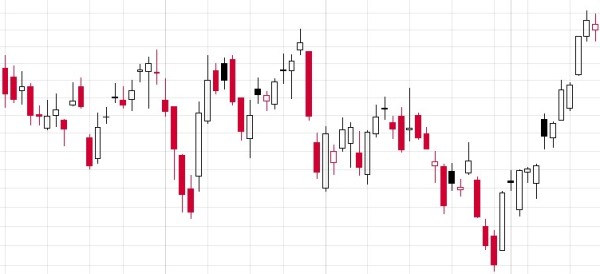
Swing trading is one of the most approachable ways to be involved in the stock market — not because it’s simple, but because it matches how markets actually move.
The term "swing trading" is itself a little misleading. Most of us envision an actual swing or a pendulum rocking back-and-forth in a predictable cycle. Unfortunately, the market is more chaotic than that.
It is better to understand swing trading as being more like the wind. Sometimes there is a gentle breeze. Other times a gust of wind can push things quickly. Or the wind could change direction. You want to be ready to act when the conditions change.
Time Period
At Swingex, we tend to view a swing trade as lasting from 3 days to 3 weeks. Others might define it differently and they are not wrong. The important thing to consider is that time is elastic in swing trading. You trade when the setup appears, exit when the swing ends. You don't need to worry about the clock or the calendar.
While the holding period is a defining characteristic of swing trading, it is best to think about it more as the pace of your trading. You want to actively monitor market conditions while also having the patience to let anticipated moves play out regardless of how long it takes.
Less Is More
This may seem counterintuitive, but we see the benefits of swing trading as being what there is less of.
Most of all, there is less stress with this style of trading. A brief downdraft in the market lasting a few minutes is not going to kill your trade. Even a down day is perfectly tolerable so long as the underlying setup for your trade is still valid.
Pro Tip:
Don’t obsess over squeezing every last penny out of a trade. Successful swing traders mainly care about catching the majority of a swing without needing to pinpoint the exact highs and lows.
Beyond that, there is less noise in swing trading. Chart patterns and statistical indicators become unreliable on shorter intraday timeframes. Those zigs and zags you see on a 5-minute chart get smoothed away on daily or weekly charts.
Most importantly for people with other demands on their daily life, swing trading can be done well with less time needed. You do not need to have “eyes on glass” during the entire day. Finding a pretty good entry point can lead to a profitable swing trade even without getting the optimal price.
Some Pitfalls
Thinking about the negatives of swing trading, the first thing that comes to everyone’s mind is the possibility that something bad could happen while the market is closed.
Pro Tip:
Many (not all!) swing traders pay attention to the dates of upcoming earnings reports so that they can avoid holding shares on those days. Owning a stock that gapped down on earnings can be a portfolio killer.
Over longer periods of time, that intraday noise gets re-labeled as volatility. Will a couple down days in a row shake you out of a trade? Maybe it should. Often times, it should not.
In the end, the market will test your patience. You need to have a good amount of it as a swing trader. Having too much patience, though, can be dangerous to your wealth. Keep in mind what we said earlier: it is a matter of finding the right pace to your trading.